

Starlink: When It Works and When There Are Better Options
Starlink has become a household name. You see ads, hear about it online, and it sounds like a game-changer for internet. The reality is more nuanced than that. While Starlink has genuine use cases, many people considering it actually have access to better options they're not aware of.
NBN’s fibre to the premises connections are a superior service. Even if you’re on fibre to the node, you might be eligible for the free fibre upgrade. Understanding the difference between fibre and Starlink helps you make the right choice for your situation.
How Starlink Works
Starlink is a satellite internet system. It works by receiving signals from a network of satellites orbiting Earth and converting those signals into internet access for your home.
The primary appeal is for those in remote areas where traditional internet infrastructure doesn't reach or is very unreliable. In these places, satellite internet gets you online when nothing else is available.
But satellite internet comes with inherent trade-offs that matter for most users.
The Latency Problem
Satellite internet has higher latency than ground-based connections. Latency is the delay between sending a request and receiving a response.
With ground-based internet (NBN, for example), latency is typically 2-25 milliseconds, depending on your type of fibre connection. With Starlink, you're typically looking at 25-40 milliseconds, sometimes higher depending on atmospheric conditions.
NBN’s Fibre to the Premises (FTTP) has latency around 2-10 milliseconds, which is considerably faster than Starlink.
For basic browsing and email, this difference is unnoticeable. For video calls, gaming, or real-time applications, latency matters. A lag of even 30 milliseconds is noticeable and annoying. For gaming, it affects competitive play and for video calls, it can create awkward delays.
This isn't something Starlink can improve over time. It's a physical limitation of satellite internet because the signal has to travel to space and back.
The Congestion Issue
When Starlink was new, it was fast and uncongested. As more people have started using it, the overall performance has degraded.
All users in a geographic area share a fixed satellite capacity. As the number of users increases in an area, that capacity gets divided among more users. This causes slower speeds and worse performance during peak times.
For example, in the Perth Metro area, the number of residential Starlink subscriptions has reached satellite capacity. Future users must join a waitlist if they want the service, and need to wait until more capacity is added. Starlink imposes this waitlist to prevent oversubscribing.
This trend will continue as the demand for Starlink outpaces the company’s ability to launch more satellites.
Just because Starlink looks like the best option with lightning fast speeds, doesn’t mean it’ll stay that way as more users in an area adopt it.
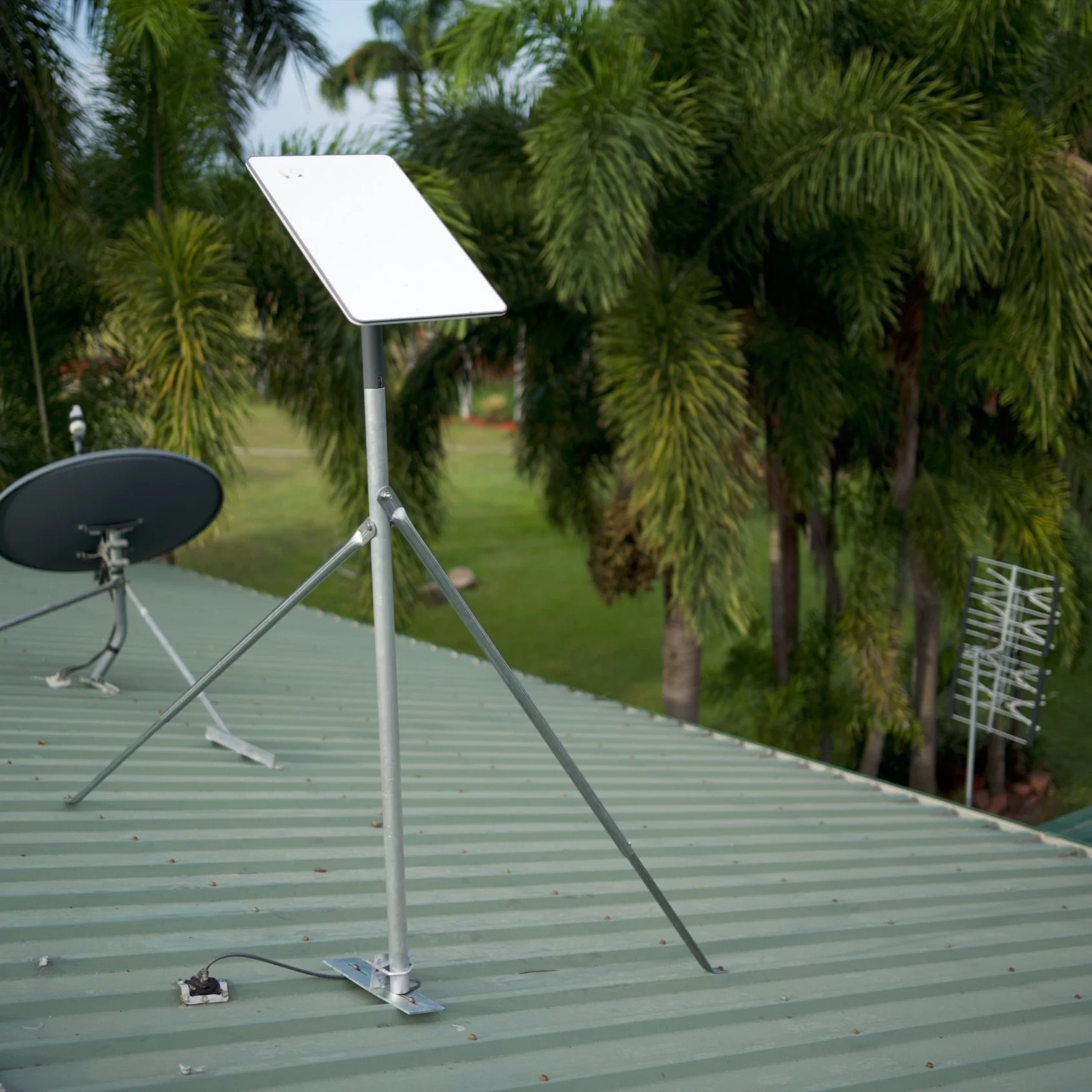
Starlink 1.8m cyclone-rated mount
Weather Dependency
Starlink performance can degrade in heavy rain, storms, strong cloud cover and poor weather conditions. NBN fibre is usually unaffected by weather. While a property’s individual fibre connection is normally resilient against weather, the pits, junctions and other distribution points can sometimes be affected.
In North Queensland, where we get significant rainfall & cyclones during the wet season, NBN has the advantage that it is mostly underground.
If you decide to get Starlink, be sure to choose a cyclone-rated mount. The mounts offered by Starlink are not cyclone-rated. The mounts Townsville Internet uses in all installations are 1.8m tall & cyclone-rated.
Cost Comparison
Starlink has much higher upfront costs compared to an NBN connection. Starlink equipment costs several hundred dollars upfront. While there is often a promotion running, which gives a discount on the hardware, there is still the cost of a mount and labour to install the dish.
Getting connected on an NBN plan usually only comes with two costs: the monthly NBN plan and a modem. Sometimes your provider will bundle the modem into the monthly cost.
When you factor in the equipment cost plus higher latency, lower speeds (especially as congestion increases) and data caps, NBN fibre is better value for almost all residential users.
When Starlink Actually Makes Sense
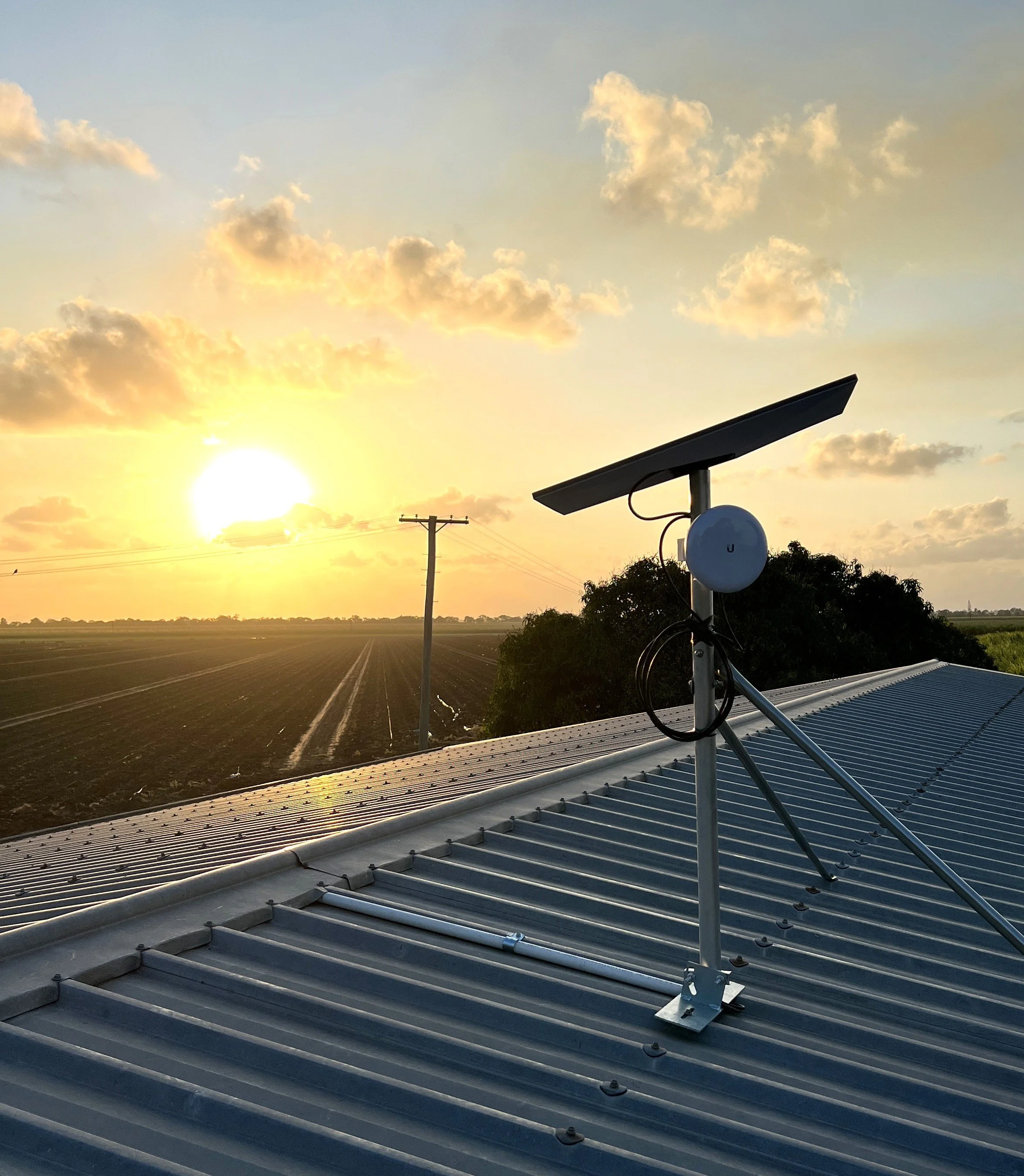
Starlink mounted on a rural property
If you live in a remote area, NBN’s underground infrastructure likely won’t reach you. In these cases, your only options are Fixed Wireless, NBN’s own satellite internet SkyMuster, or Starlink. Of those options, we recommend Starlink. We’ve had customers on all three of those options, and Starlink routinely performs the best.
Even if you’re in an area where Starlink is the only or best option, you still need to check your address to ensure there is still satellite capacity to service your connection. You can check your connection on Starlink’s website here.
NBN Fibre: Why It's Superior When Available
NBN fibre to the premises (FTTP) delivers faster speeds, lower latency, and better long-term reliability.
There are a variety of internet service providers who offer NBN’s services, which gives consumers the ability to compare and choose the best option. Because there are so many providers competing with each other, they are incentivised to offer deals and reward the loyalty of existing customers.
Additionally, the support offered can make all the difference when you experience issues. Choosing an option with local support is important to make getting help easy.
Long-term, NBN’s fibre infrastructure is more scalable and reliable than satellite. NBN has continuously been rolling out new FTTP connections for years. There are no physical limitations forcing degradation as more people adopt it.
The prices are usually more competitive than Starlink when you factor in the cost of Starlink’s installation. Also, with most providers offering 7 or more internet plans, you have greater flexibility in finding a plan to suit your needs.
Checking Your NBN Availability
Many people interested in Starlink haven't checked whether NBN fibre is available at their address. They just see and hear about Starlink and assume it's their best option.
When we talk to people considering Starlink, the conversation usually goes:
"Have you checked whether you've got NBN fibre available?" Often the answer is yes, they do. In almost all of those cases, we recommend an NBN plan because it’s advantageous on speed, reliability and price.
Before you commit to Starlink, check what NBN options are available at your address here. You'll see what technology type is available (FTTP, FTTN, Fixed Wireless, etc.). You'll also see the availability date if it's not installed yet.
If you've got FTTP available now or you’re on FTTN and eligible for the upgrade, we recommend you choose an NBN plan through an internet service provider.
If you've got FTTN and you’re not eligible for the upgrade, we’d recommend considering your internet needs. If you only need the internet for light usage like web browsing and checking emails, a FTTN plan would be suitable. However, if you have heavier usage like online gaming, we’d recommend Starlink.
If you've got Fixed Wireless, SkyMuster, or no NBN options available, then we’d recommend Starlink as it is the best option.
The Bottom Line
Starlink is useful for remote areas where traditional infrastructure doesn't reach. For Townsville residents and businesses with NBN fibre available, fibre is the better choice.
If you've got questions about whether NBN fibre is available at your address, or if you want to compare your current setup against other options, we can help you figure it out.
Give us a call on 1300 878 468. We'll be honest about what makes sense for your situation, whether that's NBN, upgrading your current setup, or exploring alternatives.